
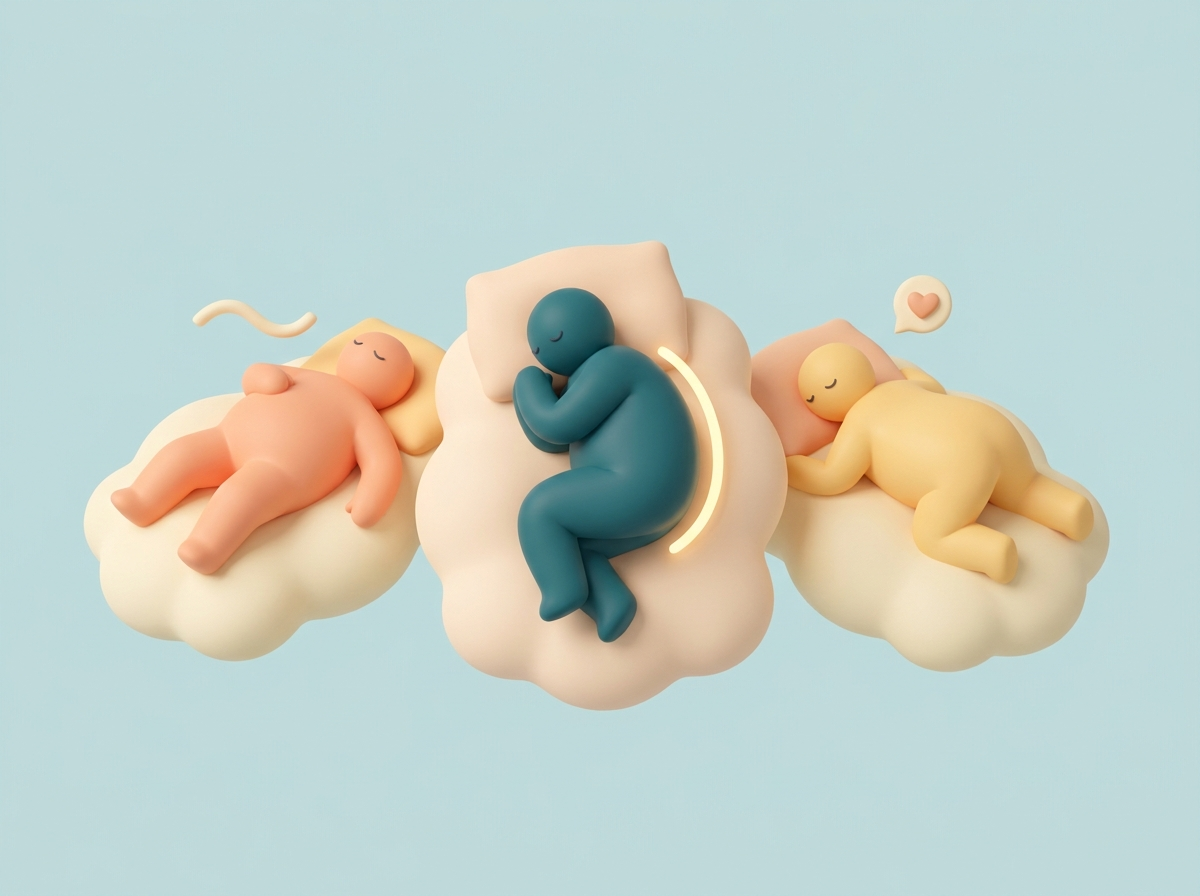
You spend roughly a third of your life asleep, and the position you default to can genuinely affect back pain, digestion, breathing, and even skin. None of this means there’s one universally “correct” position — but understanding the trade-offs can help you make small adjustments that matter.
Back Sleeping
Generally considered the best position for spinal alignment, since it distributes weight evenly and keeps the neck and back in a neutral position, especially with a supportive pillow. The downside: back sleeping can worsen snoring and obstructive sleep apnea for people prone to it, since gravity allows the tongue and soft tissue to fall backward and partially block the airway.
Side Sleeping
The most common sleep position, and a reasonable one for most people. Side sleeping, particularly on the left side, can ease acid reflux for some people since it keeps the stomach lower than the esophagus, and it’s the generally recommended position during pregnancy since it improves blood flow to the fetus and placenta compared to lying flat on the back in later pregnancy. The main downside is potential shoulder and hip pressure, which a supportive mattress and a pillow between the knees can help with.
Stomach Sleeping
Generally considered the least favorable position for spinal health, since it typically requires turning the head to one side for extended periods, which can strain the neck, and it tends to flatten the natural curve of the lower back. It’s not dangerous, but people with chronic neck or back pain are often advised to try transitioning away from it if they can.
Sleep Position and Snoring or Sleep Apnea
Because back sleeping can worsen airway obstruction, side sleeping is often recommended for people who snore or have mild obstructive sleep apnea. This can help, but it isn’t a substitute for a proper diagnosis and treatment if sleep apnea is suspected — loud snoring with gasping, choking, or long pauses in breathing during sleep, plus daytime fatigue, warrants a sleep study, not just a position change.
Sleep Position and Digestion
Left-side sleeping is commonly suggested to ease nighttime acid reflux and support digestion, based on the anatomy of how the stomach and esophagus connect. The effect is real but modest — it helps some people meaningfully and does little for others, and it’s not a substitute for medical treatment if reflux is frequent or severe.
Practical Tips for Switching Positions
If you’re trying to shift away from stomach sleeping toward side or back sleeping, a body pillow can help make the new position more comfortable and harder to roll out of. Changing a long-held sleep habit typically takes a few weeks of consistency before it feels natural.
Frequently Asked Questions
Is there one “best” sleep position for everyone?
Not universally — back and side sleeping are generally favored for spinal alignment and reflux, but the right choice depends on individual factors like pregnancy, snoring, reflux, and existing pain.
Can changing sleep position actually fix chronic back pain?
It can help for some people, particularly by reducing added strain from stomach sleeping, but chronic back pain often has multiple contributing factors and may need a broader evaluation, not just a position change.
Does sleep position affect wrinkles?
Some dermatologists note that consistently sleeping with your face pressed into a pillow (common in stomach and some side sleeping) may contribute to “sleep lines” over years, though the effect is minor compared to sun exposure and skincare habits.
What sleep position is recommended during pregnancy?
Left-side sleeping is generally recommended in the second and third trimesters. If you wake up on your back, that’s normal and not something to worry about — just settle back onto your side.
The Bottom Line
Sleep position genuinely affects back pain, reflux, and snoring, with side and back sleeping generally favored over stomach sleeping. Small adjustments can help, but persistent pain, reflux, or suspected sleep apnea are worth discussing with a doctor rather than solving with position alone.
Leave a Reply