
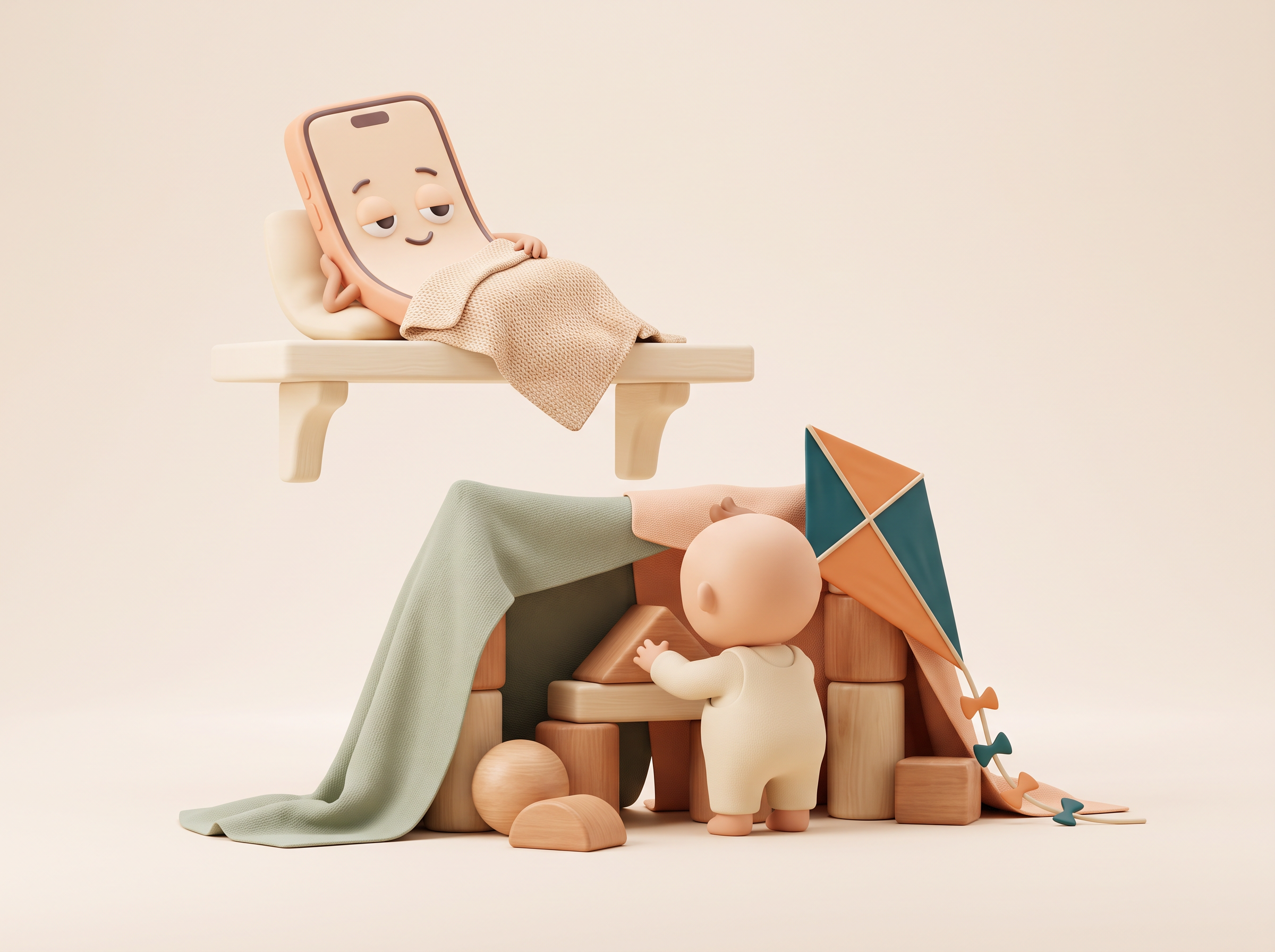
Every parent has tried the screen-free activity that gets a five-minute glance and a hard pass. The trick isn’t finding more activities — it’s finding the handful that kids actually come back to on their own. Pinterest searches for screen-free family activities have jumped sharply this year, and the ideas gaining traction share a pattern: they give kids a reason to repeat them, not just try them once. What makes an activity earn a repeat request usually isn’t complexity — it’s some combination of a satisfying payoff, room for the child to change it up, and just enough challenge to feel like a small accomplishment. Here are seven that tend to earn a second (and third) request.
1. The Living Room Obstacle Course
Couch cushions, pillows, painter’s tape, and a stopwatch turn a rainy afternoon into a full-body challenge. Kids love that they can rebuild the course differently each time and try to beat their own record, which is what separates this from a one-and-done activity — there’s always a new layout to try or a faster time to chase.
- Use painter’s tape on the floor for a “lava” path they can’t touch
- Time each run and let them design the next layout
- Add a balance beam using a taped line or a low, sturdy board
2. Invisible Ink Notes
Lemon juice and a cotton swab let kids write secret messages that only appear when held near a warm lightbulb or gently heated by an adult with a hairdryer. The reveal moment is what keeps this one in rotation — kids will write a dozen “invisible” notes just to watch them appear, and older kids often turn it into a game of passing secret notes between siblings or friends.
3. Backyard (or Balcony) Scavenger Hunts
A simple list — something smooth, something that makes a sound, something round, something that smells nice — works for toddlers through tweens because you can scale the difficulty. Rotate the list each week so it stays fresh instead of becoming a chore.
- Theme it seasonally (fall colors, signs of spring, bug hunt)
- Let older kids write the list for younger siblings
- Use a small basket or bag so items get collected, not just spotted
4. Cardboard Box Anything
A large appliance box beats most toys on the market, and it’s not close. Kids return to the same box for days because it becomes whatever they need that day: a fort, a car, a puppet theater, a rocket. Cut a window and a door, hand over some markers, and step back.
5. Kitchen Science That’s Actually Edible
Mixing baking soda and vinegar is fine, but activities kids repeat tend to end in a snack. Making butter by shaking heavy cream in a jar, or growing rock candy on a string, gives kids a science process with a payoff they can eat.
6. Family Card Game Tournaments
Simple games like Uno, Go Fish, or Slapjack build in enough randomness that kids of different ages can genuinely compete, which is why they ask to play again almost immediately. Keep a running “family championship” tally on the fridge to add a bit of stakes without pressure.
7. Nature Journals
A cheap notebook and colored pencils turn a regular walk into an activity kids want to repeat, especially if you let them draw whatever caught their eye rather than assigning a topic. Over a few weeks, the journal itself becomes something they’re proud to flip through.
- Keep entries short — one drawing and a sentence is plenty
- Bring it on walks, at the park, or even just in the backyard
- Avoid correcting spelling or drawing skill; the point is noticing, not accuracy
The Bottom Line
None of these require special equipment or a Pinterest-perfect setup, and that’s part of why they work: low prep means you’ll actually do them again. A big part of what makes an activity earn a repeat request is simply your own willingness to sit down and do it with them the first time — kids tend to return to what they associate with a parent’s full attention, not just the activity itself. Every child is different, so not every idea here will land in every family, and that’s completely normal. If you’re navigating screen-time changes alongside a child who has significant anxiety, sensory needs, or developmental concerns, it’s worth talking with your pediatrician about an approach that fits your child specifically.
Leave a Reply