
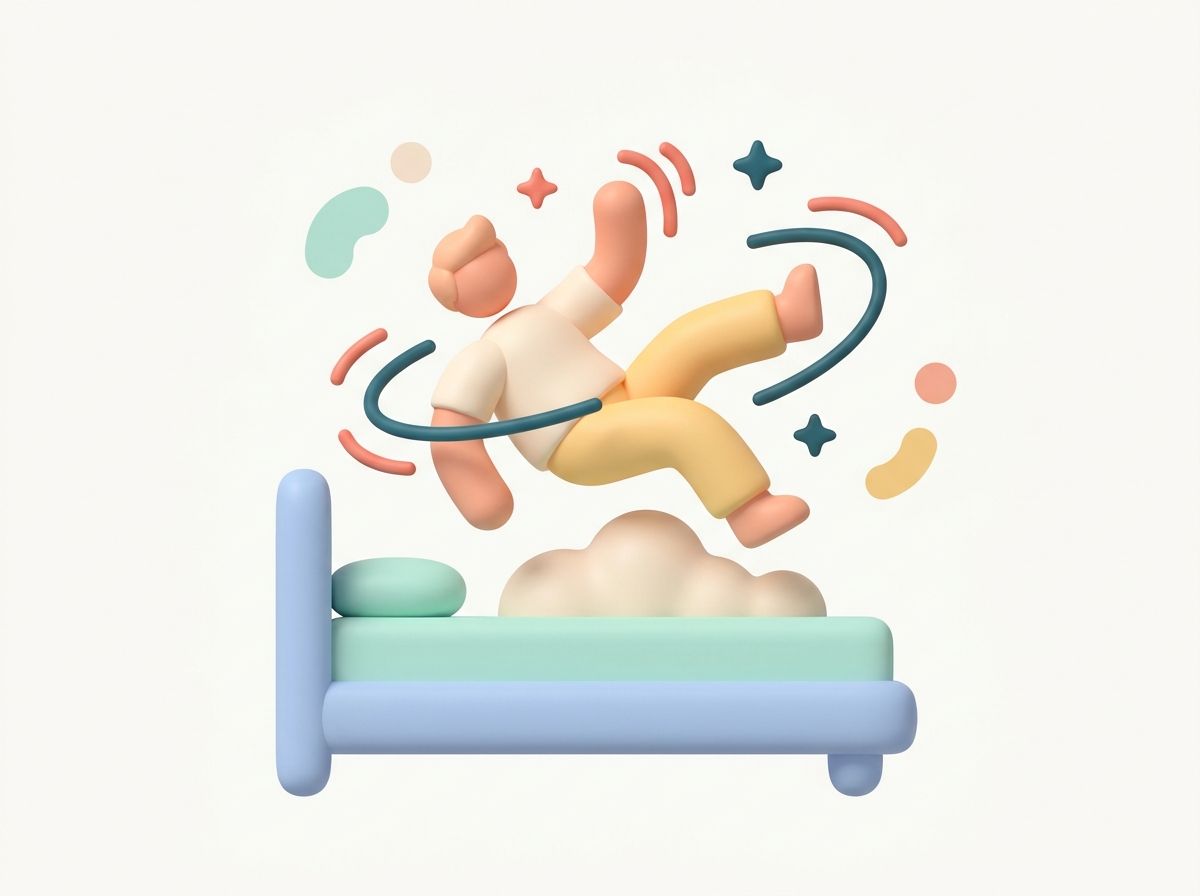
You’re drifting off to sleep and suddenly your whole body jerks, sometimes hard enough to wake you up completely. It can feel alarming the first time it happens, but this is one of the most common and best-understood sleep phenomena there is. Here’s what’s actually going on and when it’s worth mentioning to a doctor.
What a Hypnic Jerk Actually Is
The sudden twitch you feel while falling asleep is called a hypnic jerk (or sleep start), and it’s extremely common — surveys suggest most people experience one at some point, and many people get them regularly. It happens during the transition from wakefulness into light sleep, when your brain activity, breathing, and heart rate are all slowing down at once. One leading theory is that as your muscles relax, your brain briefly misreads the sensation as falling and fires off a quick motor reflex in response, similar to a startle reaction. It’s not a sign that anything is wrong, and it isn’t dangerous.
What Makes Hypnic Jerks More Likely
Caffeine and stimulants
Caffeine, nicotine, and other stimulants keep your nervous system more active than usual, which can make the jerks more frequent, especially if consumed later in the day.
Stress and anxiety
Higher stress levels are associated with more frequent hypnic jerks, likely because it takes your nervous system longer to fully downshift into sleep.
Irregular sleep schedule or sleep deprivation
Going to bed at inconsistent times or not getting enough sleep overall seems to increase how often people notice these jerks.
Intense exercise close to bedtime
Vigorous physical activity right before bed keeps your body more physiologically aroused than usual, which some research links to more frequent sleep starts.
What Can Help Reduce Them
If hypnic jerks bother you or wake you up often, the most effective approach is addressing the things that make them more likely: cutting back on caffeine in the afternoon and evening, keeping a consistent sleep schedule, winding down with a calmer routine before bed, and avoiding intense workouts in the hour or two before sleep. For most people, these small adjustments noticeably reduce how often it happens.
When It’s Worth Mentioning to a Doctor
An occasional hypnic jerk isn’t something to worry about. It’s worth bringing up with a doctor if the jerks are extremely frequent, happen throughout the night rather than just at sleep onset, are accompanied by other symptoms like leg discomfort that makes you want to move your legs, or are seriously disrupting your sleep. In those cases, a doctor can check for related but distinct conditions like periodic limb movement disorder or restless legs syndrome, which need a different approach.
Frequently Asked Questions
Are hypnic jerks a sign of a neurological problem?
For the vast majority of people, no — they’re a normal part of falling asleep. They only warrant evaluation if they’re unusually frequent, severe, or paired with other symptoms.
Why do they sometimes come with a falling sensation or a loud noise in my head?
Both are common companions to hypnic jerks. The falling sensation is part of the same reflex; the “loud noise” (sometimes called exploding head syndrome) is a separate, also generally harmless, sleep phenomenon that some people experience alongside it.
Can hypnic jerks happen every single night?
Yes, for some people they’re a nightly occurrence, especially during periods of high stress, poor sleep habits, or high caffeine intake. Frequency on its own isn’t usually a red flag.
Do children get hypnic jerks too?
Yes, they occur at any age and are equally normal in children, though they may seem more noticeable to parents watching a child fall asleep.
The Bottom Line
Hypnic jerks are a normal, harmless part of the sleep-onset process, not a warning sign. If they’re mild and occasional, there’s nothing to do. If they’re frequent enough to disrupt your sleep, cutting back on stimulants, keeping a consistent schedule, and winding down before bed usually helps — and it’s reasonable to check in with a doctor if that doesn’t improve things.
Leave a Reply