
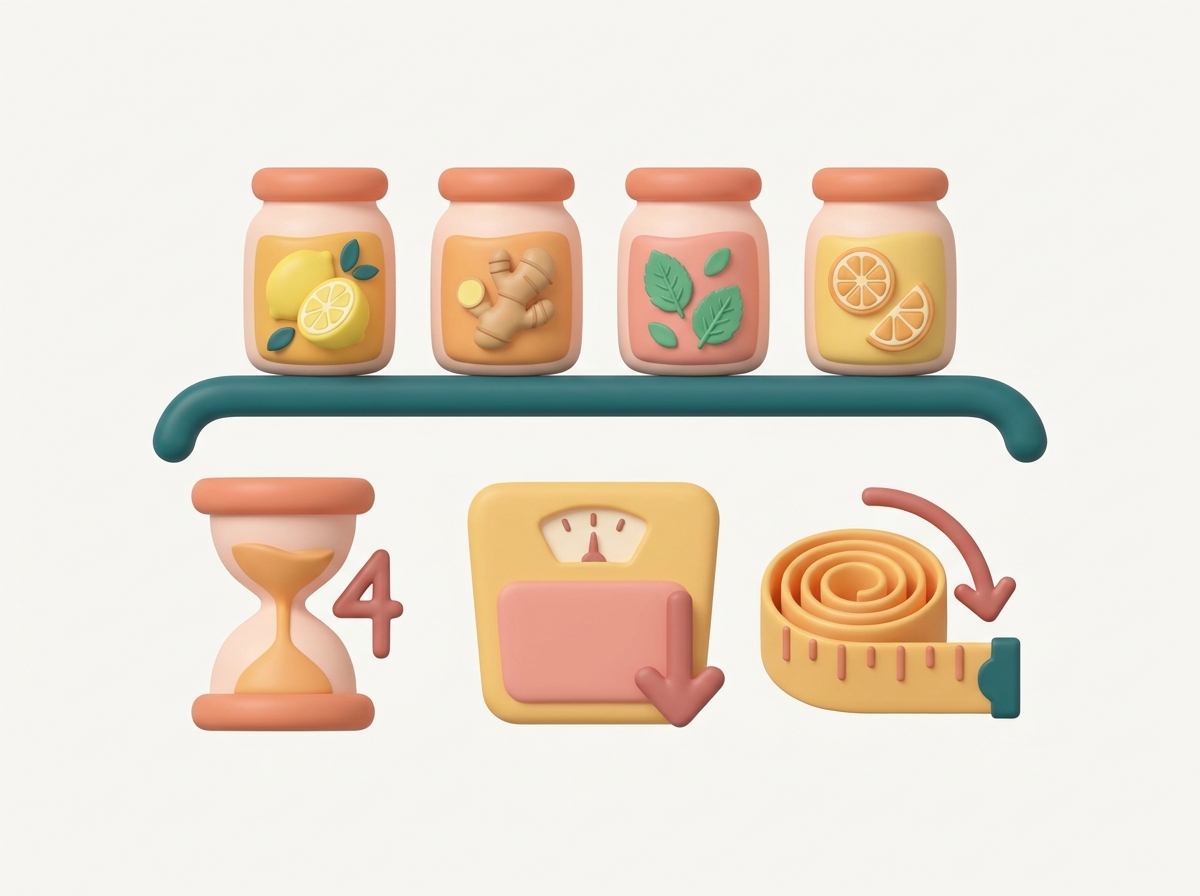
Recipes promising a specific number of kilograms and centimeters gone in exactly four days show up constantly, usually built around some combination of lemon, ginger, cucumber, or apple cider vinegar. It’s worth being upfront: no drink does that, and the number-in-days framing is exactly what should make you skeptical. Here’s what’s really happening on diets like this, and what actually helps with bloating and short-term water retention.
Why the Scale Moves So Fast on Diets Like This
These “recipes” usually work by being extremely low in calories and often diuretic (they make you urinate more), sometimes combined with cutting salt and carbs sharply. That combination flushes water weight and depletes glycogen (the carb stores in your muscles and liver, each gram of which holds several grams of water) very quickly. The scale drop is real, but it’s water and glycogen, not fat — and it reverses just as fast once you eat normally again. A waist measurement can also shrink temporarily just from reduced bloating, which isn’t the same as losing body fat around your midsection.
What Actually Causes Bloating and Water Retention
High sodium intake
Excess salt causes your body to retain water to balance sodium concentration in your blood. Processed and restaurant food is the biggest source for most people.
Carbonated drinks and swallowed air
Fizzy drinks, chewing gum, and eating too quickly all introduce extra air into your digestive tract, which shows up as bloating.
Certain carbohydrates and food intolerances
Some people bloat from foods high in fermentable carbs (beans, certain vegetables, wheat) or from intolerances like lactose sensitivity. This varies a lot person to person.
Hormonal fluctuation
Many people, especially around the menstrual cycle, retain more water at certain times of the month regardless of diet.
What Actually Helps
For genuine, lasting results — not a four-day illusion — the basics still win: a moderate calorie deficit sustained over weeks, adequate protein, regular movement, and cutting back on excess sodium and processed food. For short-term bloating specifically, staying hydrated (counterintuitively, drinking enough water helps your body stop holding onto it defensively), reducing carbonated drinks, and eating slowly can make a real difference within a day or two — safely, without the crash-and-rebound pattern.
Frequently Asked Questions
Is it dangerous to try a very restrictive diet for just four days?
For most healthy adults it’s unlikely to cause serious harm over such a short period, but it also won’t produce fat loss, and repeated cycles of this kind of restriction are linked to disordered eating patterns and worse long-term outcomes.
Why did my waist measurement actually shrink?
Reduced bloating and water retention change how your midsection looks and measures almost immediately, without any change in actual body fat. It’s a real but temporary effect.
What’s a realistic timeframe for losing visible fat around the waist?
Sustainable fat loss generally shows up over weeks, not days — a moderate calorie deficit typically produces about half a kilogram to a kilogram of fat loss per week for most people.
Are lemon or ginger drinks completely useless?
Not useless, just overstated. Staying hydrated and swapping a sugary drink for a flavored water can support a healthy diet, but neither ingredient burns fat or targets your waist specifically.
The Bottom Line
A drink that promises kilograms and centimeters gone in four days is really just triggering water loss and reduced bloating, not fat loss, and it comes back once you eat normally. Reducing sodium, staying hydrated, and cutting carbonated drinks helps with bloating quickly and safely — actual fat loss still takes a sustained calorie deficit over weeks.
Leave a Reply