
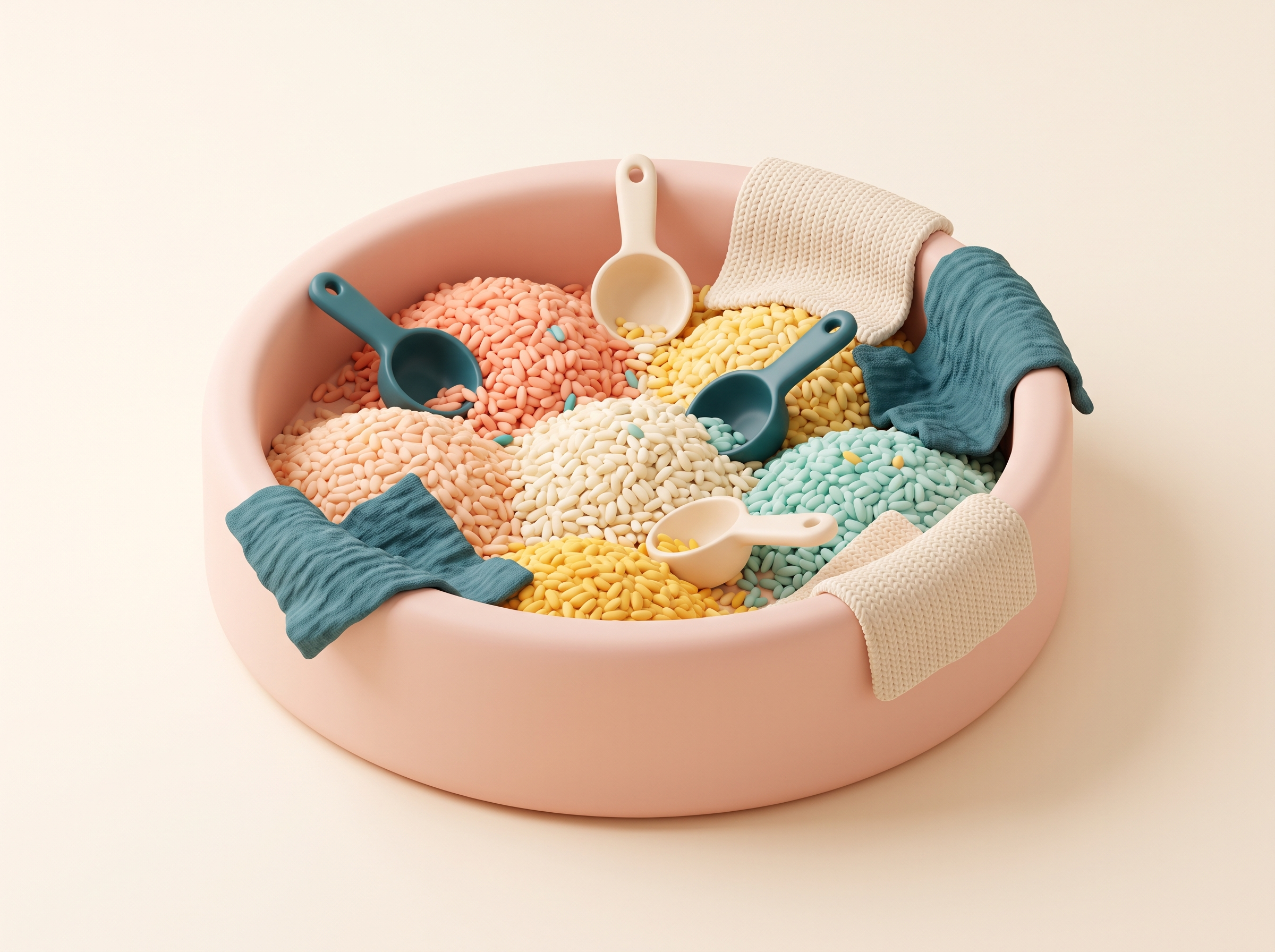
Sensory play gets recommended constantly for toddlers, but a lot of the ideas floating around involve prep that eats up more time than the actual play does. These eight ideas use things most households already have, and none of them takes longer than five minutes to set up. Sensory play matters for toddlers because it gives their developing brains a low-stakes way to practice processing touch, texture, and cause and effect — but it doesn’t need to be elaborate to do that job well.
1. Dry Rice or Pasta Bin
Fill a shallow bin with dry rice or pasta, toss in some measuring cups and spoons, and let your toddler scoop and pour. It’s simple, but the repetitive scooping motion is genuinely engaging for toddlers and tends to hold attention longer than flashier toys. Add a funnel or a few small cups of different sizes to extend the play once basic scooping loses its novelty, and a small broom nearby makes the inevitable spills part of the fun rather than a chore.
2. Frozen Toy Excavation
Freeze a few small toys in a container of water the night before, then hand your toddler a spoon (or, for slightly older kids, a small plastic hammer) to chip the toys free. It combines sensory input from the cold and texture with a satisfying “discovery” moment, and toddlers often ask to do it again immediately once the first toy is free.
3. Shaving Cream on a Tray
A dollop of shaving cream on a cookie sheet or high-chair tray gives toddlers a squishy surface to draw in with fingers. It wipes up easily and doubles as an early pre-writing activity once they start tracing lines and shapes.
4. Water Beads or Ice Cube Sensory Bin
Ice cubes in a bin with a few cups and small toys give toddlers a cold, melting, ever-changing texture to explore. Always supervise closely with any small-item sensory bin, since toddlers explore with their mouths, and skip loose water beads for children who still mouth objects.
5. Texture Walk Basket
Gather a few household items with very different textures — a cotton ball, a piece of sandpaper, a soft sponge, a smooth spoon — in a basket and let your toddler handle each one. Naming the textures out loud (“soft,” “rough,” “cold”) adds a language boost to the sensory input.
6. Homemade Playdough
A basic flour, salt, oil, and water dough comes together in a few minutes on the stove or even without cooking, and the squishing, rolling, and pinching motions build hand strength toddlers will use later for writing.
- 2 cups flour, 1/2 cup salt, 2 tablespoons oil, 1 cup warm water
- Mix, knead until smooth, and store in an airtight container
- Add a drop of food coloring for extra sensory appeal
7. Bubble Wrap Stomp Mat
Tape a sheet of bubble wrap to the floor and let your toddler stomp, crawl, or walk across it. The popping sound and texture underfoot make this a favorite for kids who enjoy more physical, high-input sensory play.
8. Sponge and Water Transfer
Two bowls, some water, and a kitchen sponge are enough for a toddler to practice squeezing water from one bowl to another. It’s a simple activity, but the hand-strengthening and concentration involved make it worth repeating often.
A Few General Tips for Sensory Play
- Lay down a towel or shower curtain first to make cleanup faster
- Rotate which activity you offer so nothing gets stale, but don’t feel obligated to have something new daily
- Follow your toddler’s lead — if they want to do the same bin three days running, that repetition is doing real work
- Stay within arm’s reach for anything involving small parts, water, or food items
The Bottom Line
Sensory play doesn’t need a curated bin or a big supply haul — most of these ideas use items already in a kitchen drawer. Every toddler engages with sensory input differently, and that’s normal; some kids dive right in while others need a few tries to warm up. If your toddler consistently avoids certain textures, seems distressed by common sensory experiences, or you have broader developmental questions, it’s worth mentioning to your pediatrician rather than guessing on your own.
Leave a Reply