
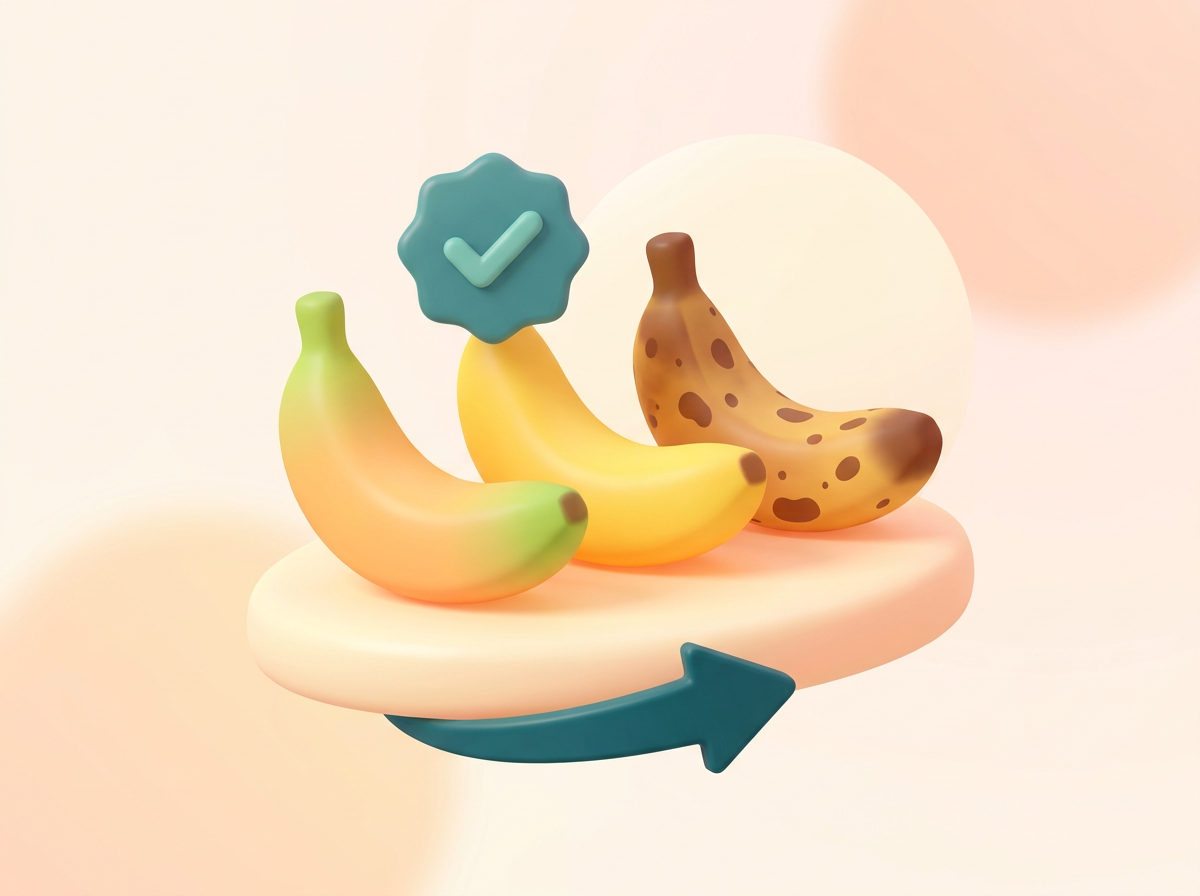
Ripe versus green bananas gets debated online as if one is secretly bad for you, but the honest answer is that it depends on what you’re optimizing for. The nutrition changes as a banana ripens, and neither stage is “best” in a universal sense.
What Actually Changes as a Banana Ripens
As a banana ripens, its starch content converts into sugar. A green or slightly under-ripe banana is higher in resistant starch and has a lower glycemic impact, while a fully ripe, spotted banana is sweeter, softer, and digests faster. Both stages contain roughly the same calories, potassium, vitamin B6, and vitamin C — ripening changes the type of carbohydrate more than the overall nutrition profile.
When a Greener Banana Might Suit You Better
Blood sugar management
The resistant starch in less-ripe bananas is digested more slowly and has a lower effect on blood sugar than the sugars in a fully ripe one. People managing blood sugar may prefer a banana that’s yellow with minimal spotting.
Gut health
Resistant starch acts similarly to fiber, feeding beneficial gut bacteria. Some people specifically eat under-ripe bananas for this reason, though this effect is modest and not a substitute for a generally fiber-rich diet.
Feeling fuller for longer
Slower-digesting starch can support satiety a bit longer than the fast sugars in a very ripe banana, though the difference in practice is modest for most people.
When a Riper Banana Might Suit You Better
Easier digestion
Ripe bananas are softer and their sugars are more readily absorbed, which is part of why they’re commonly recommended during stomach upset or for people with digestive sensitivity.
Pre- or post-exercise energy
The fast-digesting sugar in a ripe banana provides quicker, more readily available energy, which is one reason they’re a common pre-workout or recovery snack.
Antioxidant content
Some research suggests ripe bananas have somewhat higher antioxidant activity than green ones, though the practical difference for overall health is small.
Does Ripeness Actually Matter That Much?
For most people eating bananas as part of a normal, varied diet, the difference between ripeness stages is a minor optimization, not a meaningful health decision. The bigger picture — eating fruit regularly at all, in whatever form you’ll actually enjoy consistently — matters more than which shade of yellow you pick.
Frequently Asked Questions
Are green bananas bad for digestion?
Not for most people, though the higher resistant starch content can cause mild bloating in some individuals, similar to other high-fiber foods. It typically resolves as your gut adjusts.
Do ripe bananas have too much sugar to be healthy?
No — a ripe banana still has a moderate glycemic load and comes packaged with fiber, unlike added sugar in processed foods. It’s a reasonable choice for most people without diabetes.
Is it true unripe bananas are better for weight loss?
The resistant starch may support fullness slightly more, but there’s no meaningful evidence that banana ripeness alone drives weight loss. Overall calorie balance matters far more than this one variable.
Which is better for people with diabetes?
A less-ripe banana generally has a gentler effect on blood sugar due to its resistant starch content, but portion size and pairing with protein or fat matter as much or more. Anyone managing diabetes should check with their doctor or dietitian about how bananas fit their specific plan.
The Bottom Line
There’s no single “best” banana — greener bananas have more resistant starch and a gentler blood sugar effect, while riper bananas are easier to digest and provide faster energy. Both are nutritious; pick based on what you’re using it for, not marketing hype.
Leave a Reply