
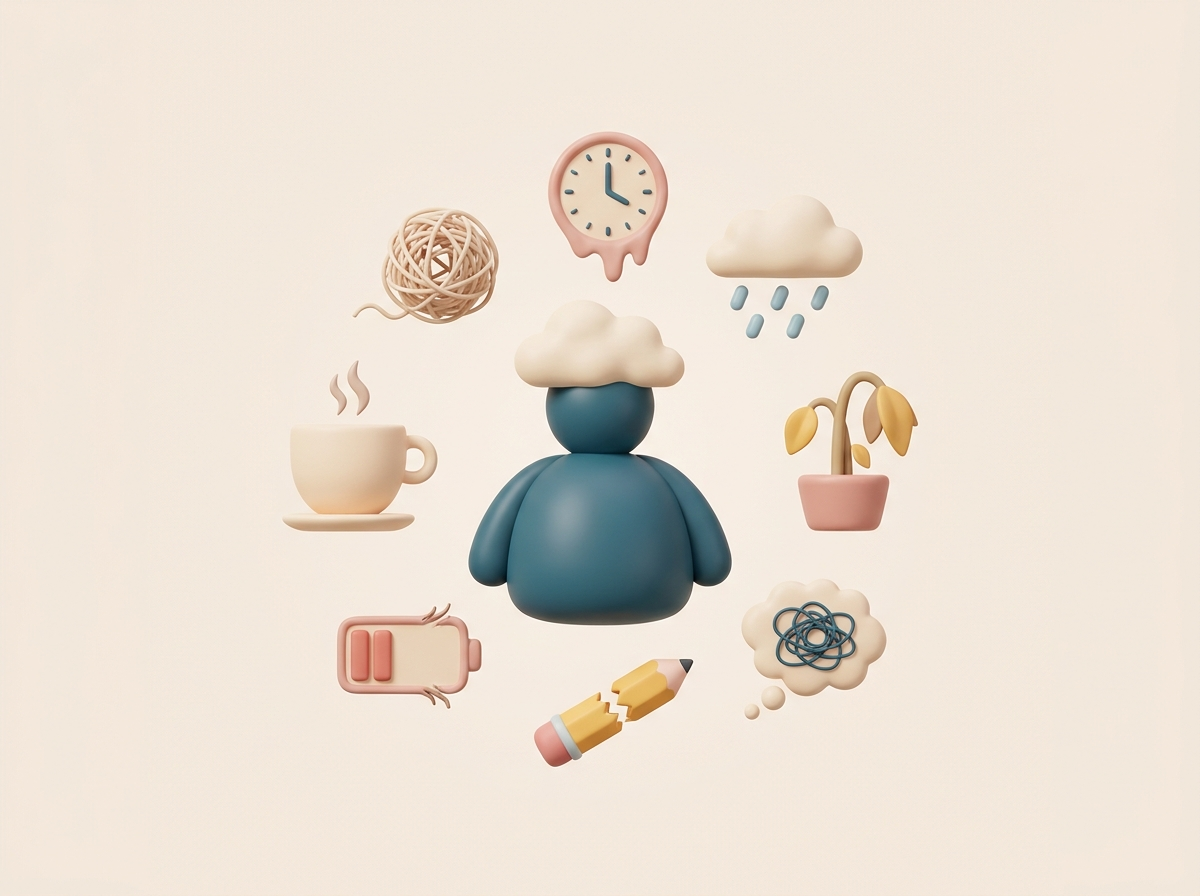
Chronic stress doesn’t always announce itself as “stress” — it often shows up as physical symptoms, sleep problems, or changes in mood that people attribute to other causes. Here are common signs of overstress worth paying attention to, and what’s worth doing about them.
Why Stress Hides in Plain Sight
The body’s stress response evolved for short bursts of danger, not months of ongoing pressure from work, finances, or caregiving. When stress hormones like cortisol stay elevated for extended periods, the effects spread beyond “feeling stressed” into sleep, digestion, immune function, and mood — which is why people often don’t connect the dots until symptoms pile up.
Common Signs of Chronic Overstress
1. Trouble falling or staying asleep
Elevated stress hormones interfere with the body’s ability to wind down, which is why racing thoughts at bedtime or waking in the middle of the night are common signs of chronic stress.
2. Frequent headaches or muscle tension
Chronic muscle tension, particularly in the neck, shoulders, and jaw, along with tension headaches, is one of the most common physical manifestations of ongoing stress.
3. Digestive changes
The gut and brain are closely connected, and stress can show up as stomach upset, changes in appetite, or altered bowel habits — sometimes labeled stress-related irritable bowel symptoms.
4. Getting sick more often
Chronic stress is linked to a weakened immune response, which can mean catching colds more frequently or taking longer to recover from minor illnesses.
5. Irritability or a short fuse
Feeling more reactive or easily frustrated than usual, especially over small things, is a common early sign that stress has built up past a comfortable level.
6. Difficulty concentrating
Sustained stress affects working memory and focus, which is why chronic stress often shows up as forgetfulness or trouble staying on task.
7. Changes in appetite or weight
Some people undereat under stress, others overeat — particularly toward high-sugar or high-fat “comfort” foods — driven partly by cortisol’s effect on appetite regulation.
8. Clenching your jaw or grinding your teeth
Jaw clenching and teeth grinding, especially during sleep, are common physical stress responses that can also cause headaches and jaw pain over time.
9. Feeling constantly “on” or unable to relax
A persistent sense of being wired, restless, or unable to switch off — even during downtime — is a common description of chronic stress that’s crossed from manageable into overwhelming.
What Actually Helps
Regular physical activity, consistent sleep habits, and setting boundaries around work or other stressors are the best-supported, practical tools for managing chronic stress. If stress is significantly affecting your daily functioning, sleep, or relationships, or if you notice symptoms of anxiety or depression alongside it, talk to a doctor or therapist — chronic stress that doesn’t improve with lifestyle changes is a legitimate reason to seek support, not something to just push through.
Frequently Asked Questions
How do I know if it’s stress or something else?
These symptoms overlap with several other conditions, including thyroid issues, depression, and anxiety disorders. If symptoms are persistent or severe, a doctor can help sort out the cause rather than assuming it’s “just stress.”
Can chronic stress cause real physical harm?
Yes — sustained high stress is linked to increased risk for high blood pressure, heart disease, digestive issues, and weakened immunity over time. It’s a legitimate health concern, not just a mental state.
What’s the difference between normal stress and something that needs professional help?
If stress is interfering with sleep, work, relationships, or daily functioning for more than a couple of weeks, or if you notice hopelessness, panic, or persistent low mood, it’s worth talking to a doctor or mental health professional.
Do relaxation techniques actually work?
Practices like regular exercise, deep breathing, and mindfulness have reasonable evidence behind them for reducing perceived stress, though they work better as consistent habits than one-off fixes.
The Bottom Line
Sleep trouble, tension, irritability, and digestive changes are common signs that stress has built up past a manageable level. Lifestyle changes help many people, but persistent or severe symptoms are worth discussing with a doctor rather than pushing through indefinitely.
Leave a Reply